
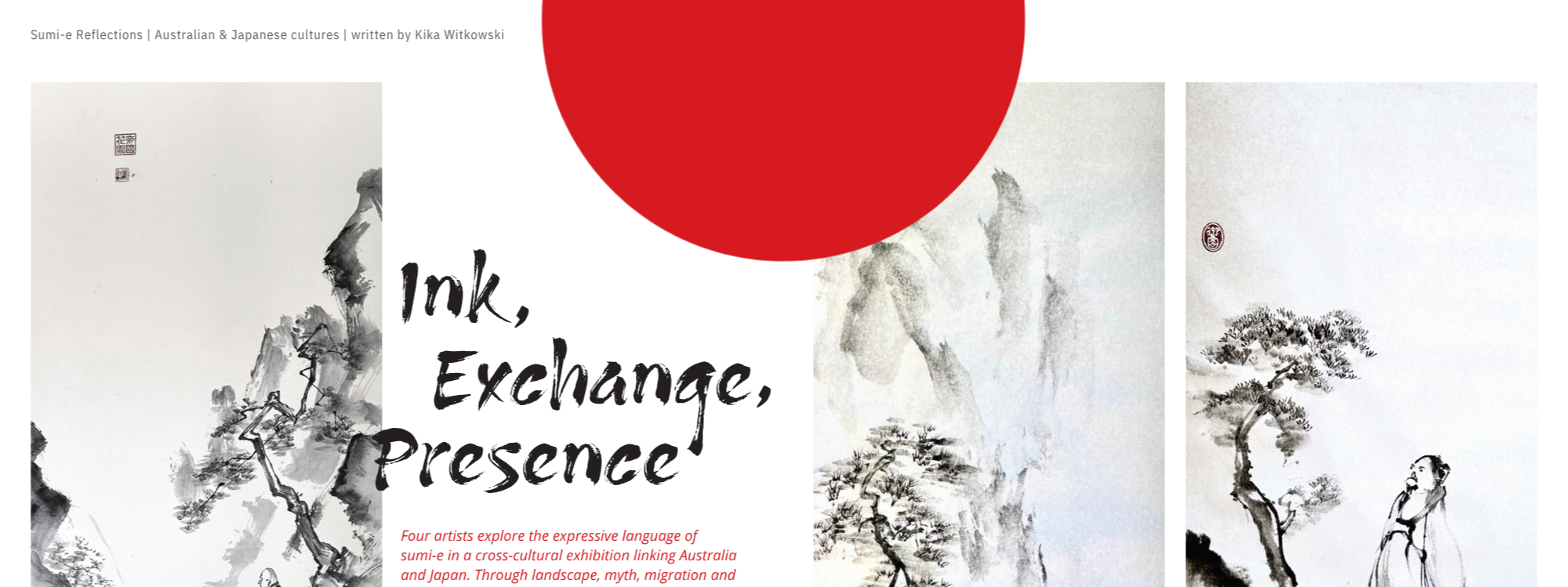
Four artists explore the expressive language of
sumi-e in a cross-cultural exhibition linking Australia and Japan. Through landscape, myth, migration and presence, ink becomes both medium and metaphor in a contemplative dialogue grounded in tradition and alive with experimentation.
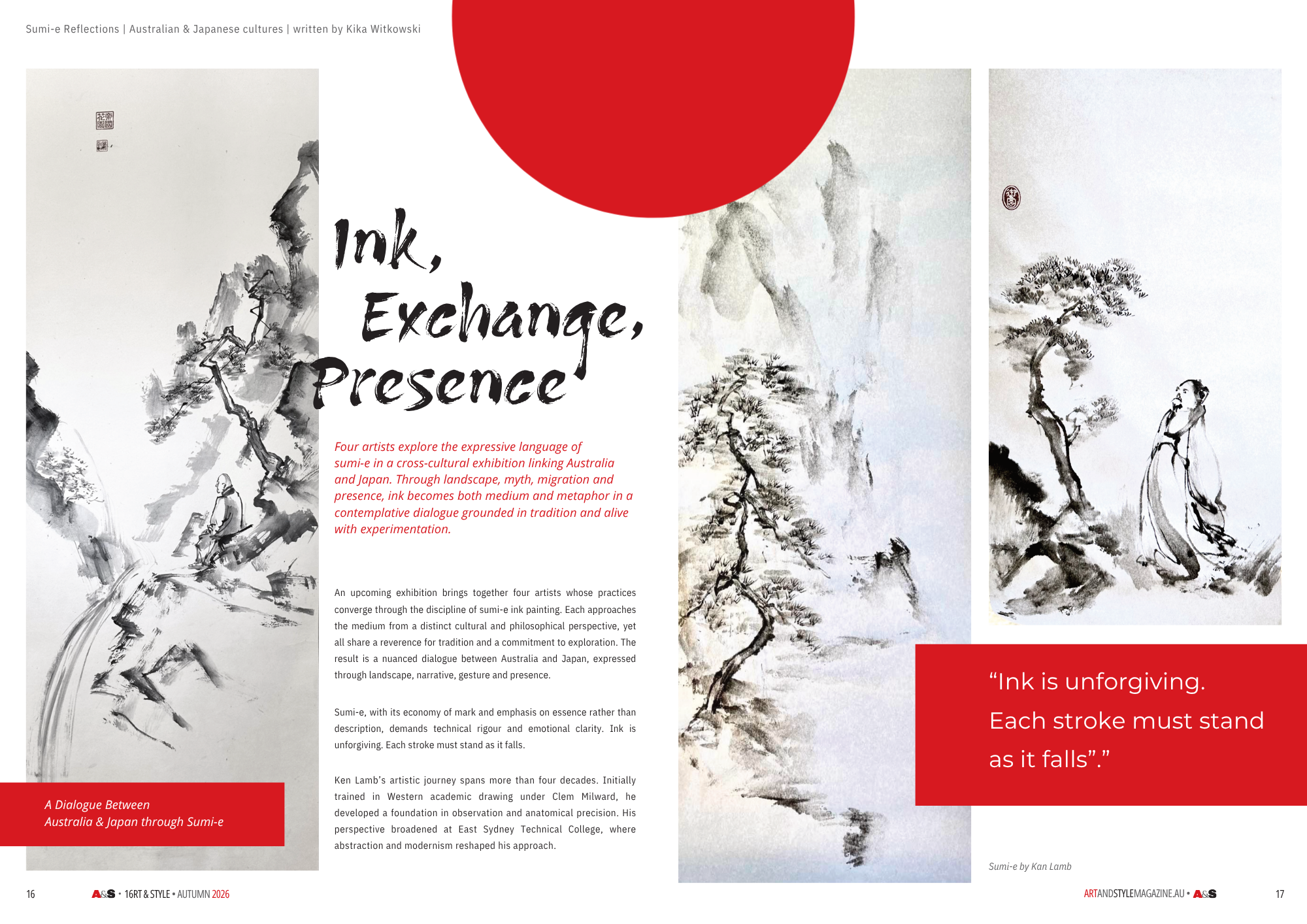
An upcoming exhibition brings together four artists whose practices converge through the discipline of sumi-e ink painting. Each approaches the medium from a distinct cultural and philosophical perspective, yet all share a reverence for tradition and a commitment to exploration. The result is a nuanced dialogue between Australia and Japan, expressed through landscape, narrative, gesture and presence.
Sumi-e, with its economy of mark and emphasis on essence rather than description, demands technical rigour and emotional clarity. Ink is unforgiving. Each stroke must stand as it falls.
Ken Lamb’s artistic journey spans more than four decades. Initially trained in Western academic drawing under Clem Milward, he developed a foundation in observation and anatomical precision. His perspective broadened at East Sydney Technical College, where abstraction and modernism reshaped his approach.
Already immersed in Japanese calligraphy and Zen philosophy, Ken deepened his practice through intensive study of sumi-e under master Hozan Matsumoto. That encounter marked the beginning of a lifelong engagement with Oriental aesthetics. Over time, his practice has included sculpture, raku pottery and major exhibitions internationally.
Today, his ink paintings are quiet meditations. Mountain forms dissolve into mist. Trees bend with gestural vitality. Figures emerge with restrained yet resonant line. Rooted in Zen principles, each work is approached as an unrepeatable moment. Painting becomes an act of attentiveness and trust.
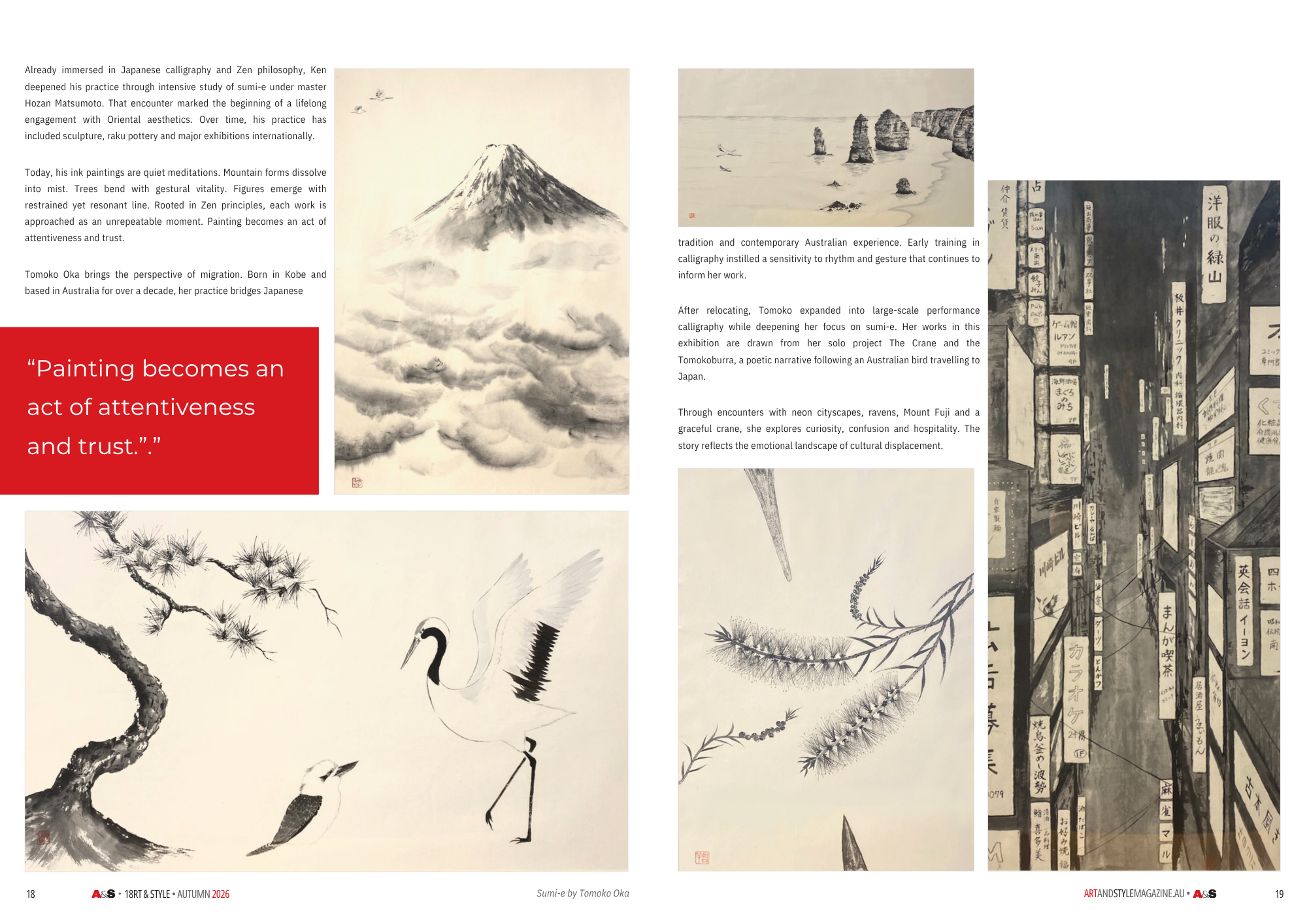
Tomoko Oka brings the perspective of migration. Born in Kobe and based in Australia for over a decade, her practice bridges Japanese tradition and contemporary Australian experience. Early training in calligraphy instilled a sensitivity to rhythm and gesture that continues to inform her work.
After relocating, Tomoko expanded into large-scale performance calligraphy while deepening her focus on sumi-e. Her works in this exhibition are drawn from her solo project The Crane and the Tomokoburra, a poetic narrative following an Australian bird travelling to Japan.
Through encounters with neon cityscapes, ravens, Mount Fuji and a graceful crane, she explores curiosity, confusion and hospitality. The story reflects the emotional landscape of cultural displacement.
Australian flora and coastal imagery appear through the lens of Japanese ink painting, capturing both unfamiliarity and wonder. Her work gently invites viewers to consider what it means to see a new world through inherited visual language.
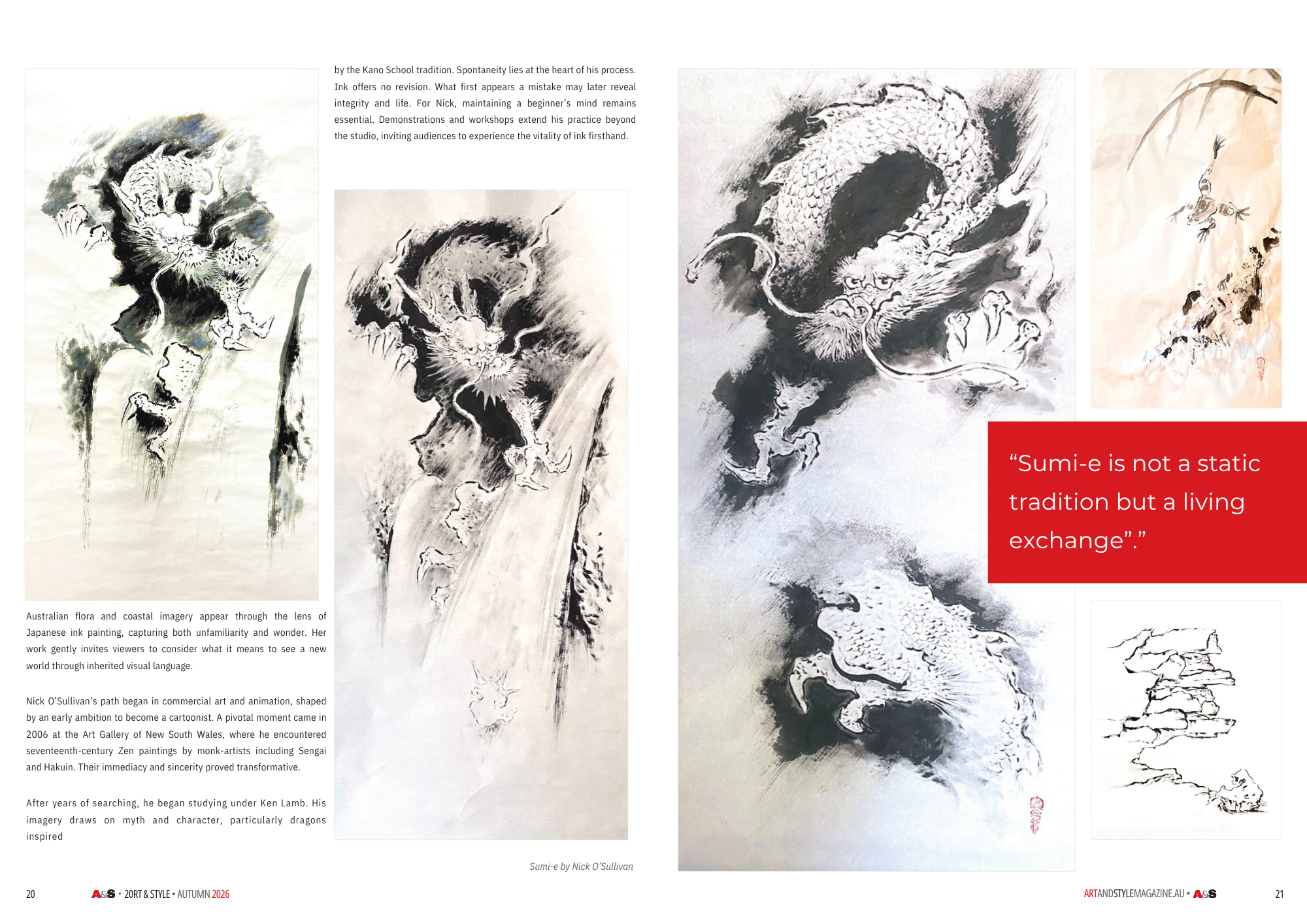
Nick O’Sullivan’s path began in commercial art and animation, shaped by an early ambition to become a cartoonist. A pivotal moment came in 2006 at the Art Gallery of New South Wales, where he encountered seventeenth-century Zen paintings by monk-artists including Sengai and Hakuin. Their immediacy and sincerity proved transformative.
After years of searching, he began studying under Ken Lamb. His imagery draws on myth and character, particularly dragons inspired by the Kano School tradition. Spontaneity lies at the heart of his process. Ink offers no revision. What first appears a mistake may later reveal integrity and life. For Nick, maintaining a beginner’s mind remains essential. Demonstrations and workshops extend his practice beyond the studio, inviting audiences to experience the vitality of ink firsthand.
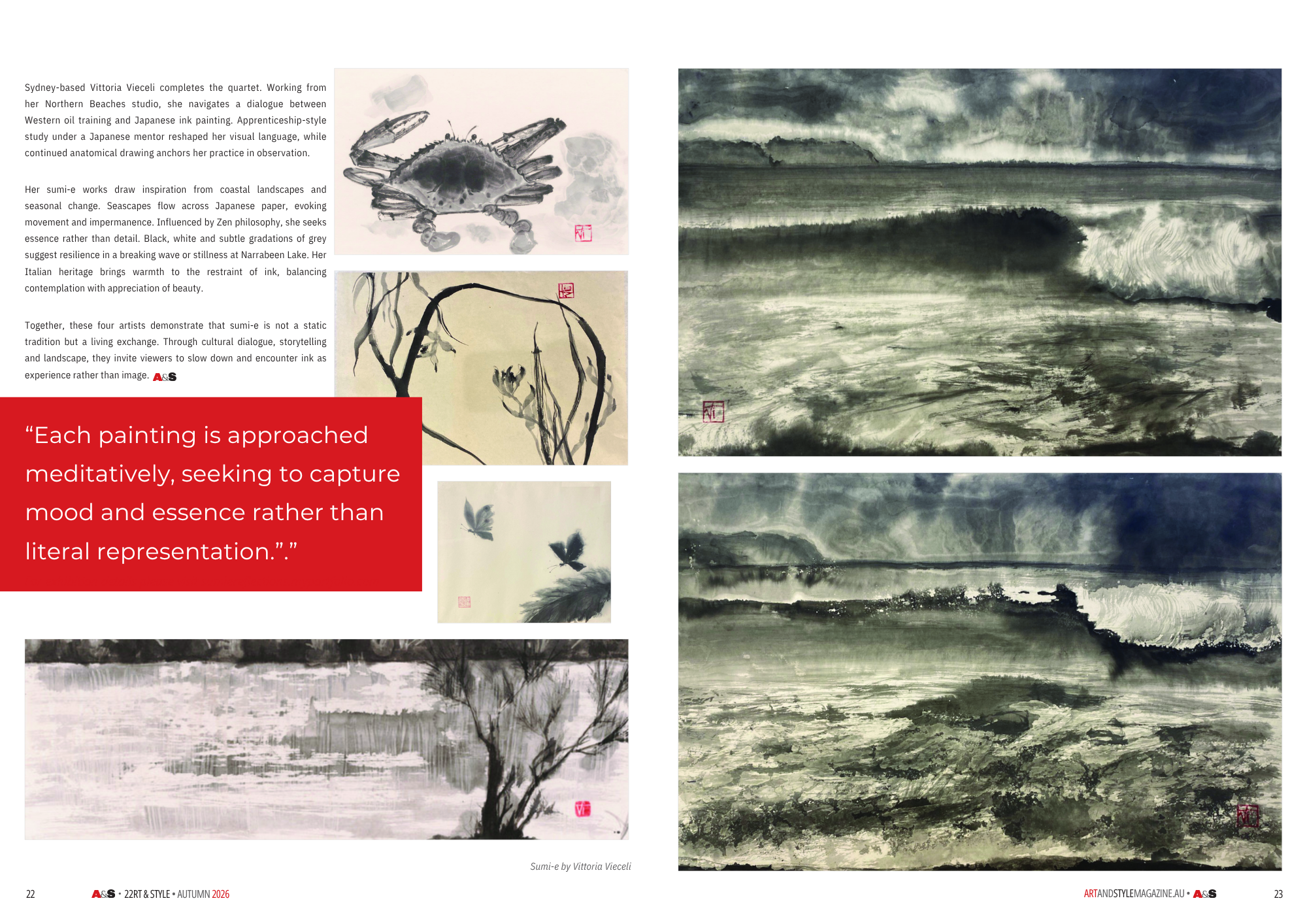
Sydney-based Vittoria Vieceli completes the quartet. Working from her Northern Beaches studio, she navigates a dialogue between Western oil training and Japanese ink painting. Apprenticeship-style study under a Japanese mentor reshaped her visual language, while continued anatomical drawing anchors her practice in observation.
Her sumi-e works draw inspiration from coastal landscapes and seasonal change. Seascapes flow across Japanese paper, evoking movement and impermanence. Influenced by Zen philosophy, she seeks essence rather than detail. Black, white and subtle gradations of grey suggest resilience in a breaking wave or stillness at Narrabeen Lake. Her Italian heritage brings warmth to the restraint of ink, balancing contemplation with appreciation of beauty.
Together, these four artists demonstrate that sumi-e is not a static tradition but a living exchange. Through cultural dialogue, storytelling and landscape, they invite viewers to slow down and encounter ink as experience rather than image.